Cohort Retention
Cohort retention tracks how a fixed customer group stays with a product as it ages.
Cohort retention measures the share of a fixed group that remains paying at successive ages. A common SaaS cohort contains customers first becoming paid subscribers in the same month. Comparing customer age avoids mixing new users with established users.
Example
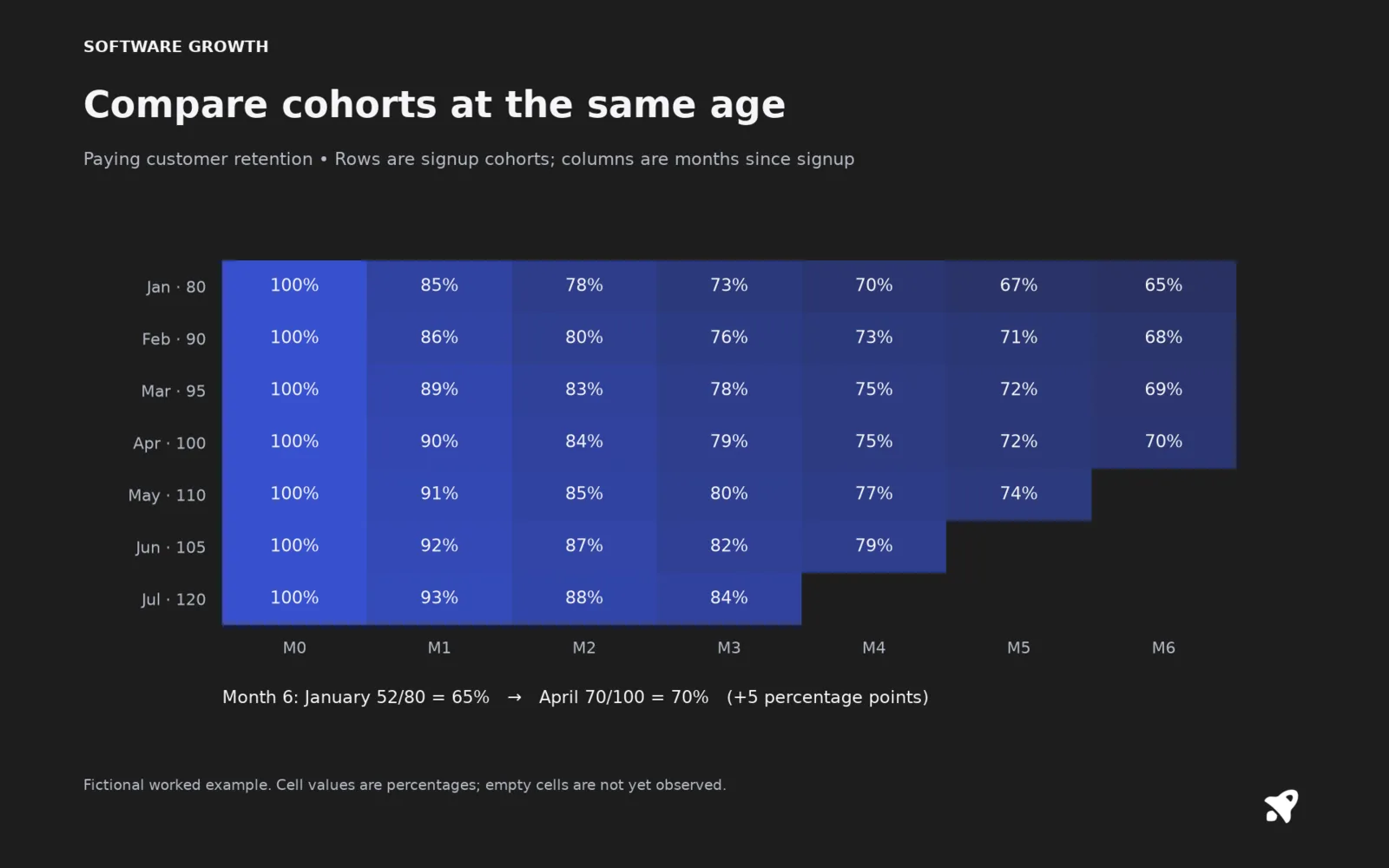
A January cohort begins with 80 paying accounts. At months one, three, and six, 72, 64, and 60 remain. Retention is 90%, 80%, and 75% respectively. Compare February’s month-three figure with January’s month-three figure.
How to use it
Look for concentrated early losses, renewal cliffs, and improving outcomes across successive cohorts. In this example, most loss occurs before month three, suggesting the team should investigate early adoption. Revenue retention adds context when remaining customers expand or reduce spending.
Young cohorts cannot supply mature retention outcomes; an empty month-twelve cell is not zero retention. Specify whether you require uninterrupted activity or count returned accounts. Use consistent cohort entry dates, account identities, and observation windows.
Further reading: ChartMogul on Cohort Retention.
Related: Cohort revenue retention, Customer retention rate.