System of record
A system of record is the software that holds the definitive, canonical version of a business's data, such as members, balances or approvals, with other tools wired to it.
A system of record is the application that holds the definitive version of some part of a business: who the customers are, what they paid, which approvals were given, who has access to what. Other tools read from it or write to it, but when two systems disagree, this is the one people trust. CRMs, accounting ledgers, HR and payroll platforms, and vertical tools like gym or clinic management software are typical examples.
Why it matters for SaaS
Being the system of record is one of the strongest positions a SaaS product can hold. In episode 855 of Startups for the Rest of Us (October 20, 2026, from 28:28), Rob Walling and Einar Vollset list it as one of eight moats that still work when AI makes software cheap to build.
Is there some canonical state that’s recorded just in your system?
Einar Vollset / Startups for the Rest of Us, episode 855 (October 20, 2026)
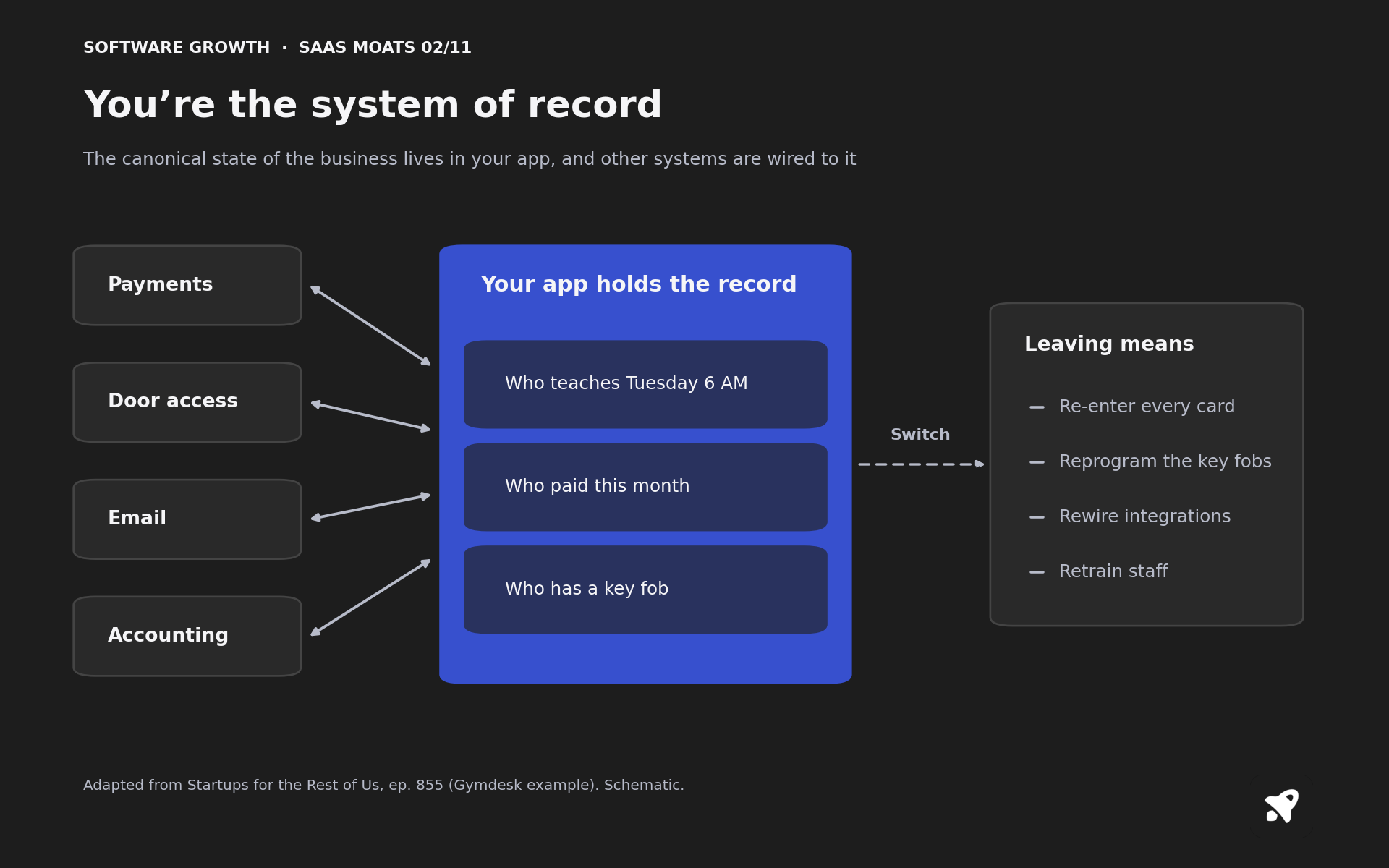
Their example is Gymdesk, a gym management tool. Who teaches Tuesday's 6 AM class, who has paid this month and who has a working key fob are recorded there and nowhere else. A customer could export the data, but leaving still means asking every member to re-enter a card, reprogramming the door system and rewiring integrations. That is why switching costs stay high even when a cheaper clone exists.
How to tell if you are one
- Would your customer's operations stop, or become uncertain, if your app went down for a day?
- Do other tools integrate with you to pull data out or push it in?
- Do decisions such as approvals, statuses or balances live only in your product?
- Is your data the version people check when numbers don't match?
If the answers are mostly no, you may be a "system of engagement": a useful layer on top of someone else's record. Those are easier to replace.
Related terms
Sources
- Episode 855: The Eight SaaS Moats that Still Work in the Age of AI, Rob Walling and Einar Vollset, Startups for the Rest of Us, October 20, 2026, from 28:28
- How to tell if a startup has a moat, Lenny Rachitsky and Dan Hockenmaier, October 13, 2026